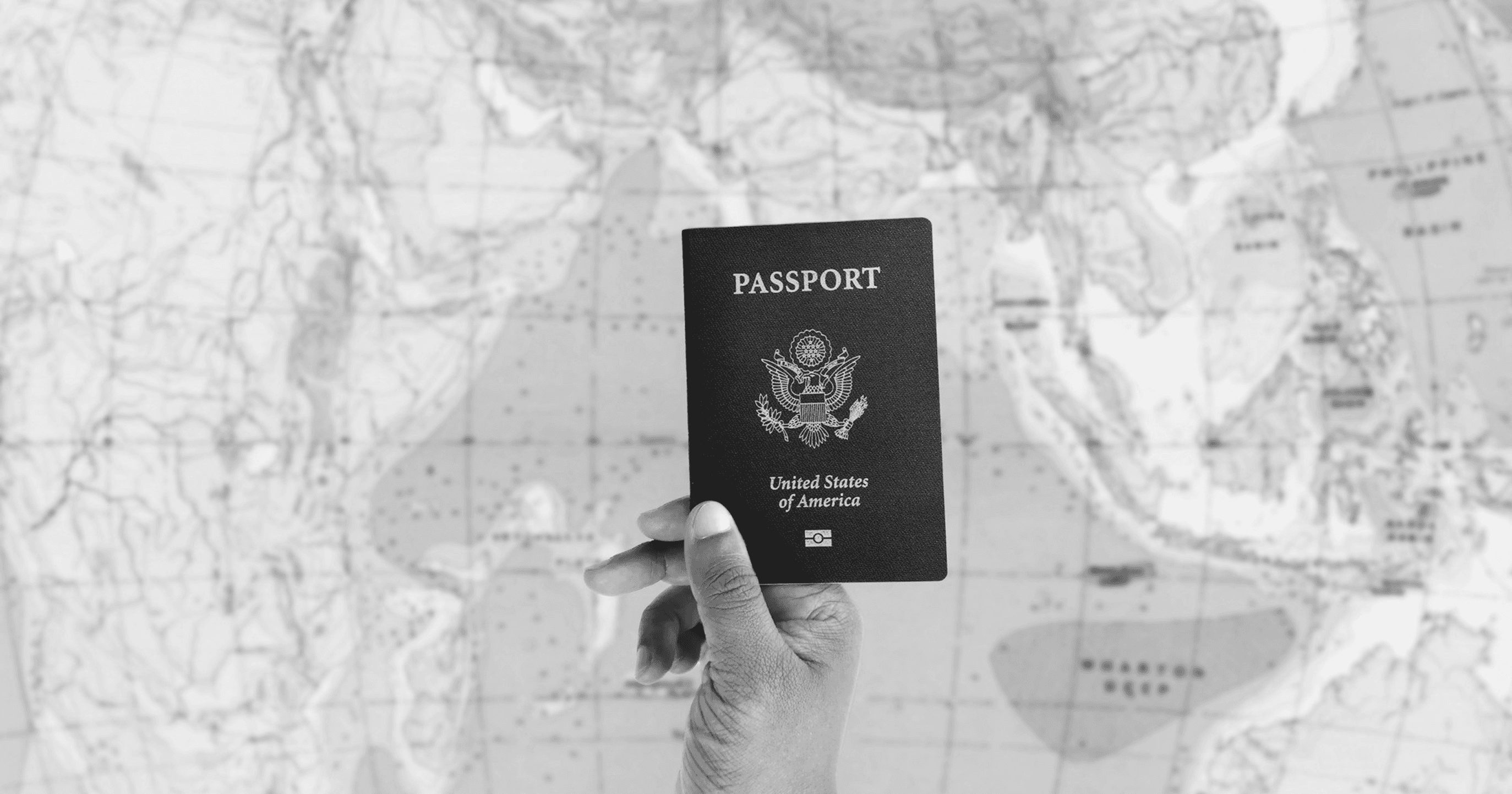
Guide to the F-1 Student Visa (2026)
15-16 minutes read

TL;DR
The F-1 is a nonimmigrant student visa for academic study at SEVP-certified U.S. institutions. It is the most widely used student visa category and covers undergraduate, graduate, doctoral, and language study programs.
The application sequence is: get accepted to a SEVP-certified school, receive Form I-20, pay the $350 SEVIS I-901 fee, complete Form DS-160, pay the $185 MRV visa application fee, and attend a consular interview. You cannot enter the United States more than 30 days before your program start date.
As of September 18, 2025, the State Department eliminated the interview waiver for most nonimmigrant visa applicants. Virtually all F-1 applicants, including those under 14 and over 79, must now attend an in-person consular interview.
As of June 18, 2025, consular officers vet applicants' social media accounts as part of the F-1 visa review process. Applicants are advised to set profiles to public before the interview.
F-1 students are admitted for Duration of Status (D/S), meaning they may remain in the United States as long as they maintain full-time enrollment, comply with all SEVIS reporting requirements, and do not violate any conditions of their status. A proposed DHS rule filed in June 2025 would replace D/S with fixed-period admission tied to the program end date; this rule was not yet finalized as of this post's publication date.
On-campus employment is permitted up to 20 hours per week during the academic term. Off-campus employment requires either Curricular Practical Training (CPT) during enrollment or Optional Practical Training (OPT) after graduation.
The grace period after program completion or OPT end is 60 days, during which the student may remain in the U.S. but may not work.
STEM graduates may extend OPT by 24 months, giving up to 36 months of post-graduation work authorization and coverage for multiple H-1B lottery attempts.
F-2 dependent visas are available for spouses and unmarried children under 21. F-2 dependents may not work in the United States. Minor children may attend school.
What the F-1 Visa Is
The F-1 is a nonimmigrant visa category established under INA 101(a)(15)(F) for individuals pursuing full-time academic study at a U.S. educational institution that is certified by the Student and Exchange Visitor Program (SEVP). It is not a path to permanent residence on its own. It is a temporary authorization to be present in the United States for the specific purpose of education.
F-1 status differs from the visa stamp in the same way that any nonimmigrant status differs from its associated visa. The visa stamp is an entry document, valid for presenting yourself at a U.S. port of entry.
F-1 status is the authorization to remain in the United States and study, which is granted by CBP at the port of entry and governed by the I-20 and SEVIS record. An F-1 visa stamp can expire while you are inside the United States without affecting your ability to continue studying, as long as your status remains valid. An expired stamp does become relevant when you travel internationally and need to re-enter.
The F-1 category covers undergraduate and graduate academic programs, doctoral and research programs, English language programs, and programs at community colleges and vocational schools with an academic (rather than vocational) focus. Vocational and non-academic programs use the M-1 visa instead.
Who Qualifies
To qualify for F-1 status, the applicant must:
Have been accepted by a SEVP-certified institution for a full-time academic program. Only schools that have been certified by SEVP and appear in the SEVP school search on the Study in the States website can issue the Form I-20 required for an F-1 visa.
Demonstrate genuine academic intent and the financial ability to cover tuition, fees, and living expenses for the duration of the program without unauthorized employment. Financial evidence is scrutinized at the consular interview.
Demonstrate nonimmigrant intent: the applicant must show, or the consular officer must be satisfied, that they have ties to their home country sufficient to ensure their return after completing their studies. This requirement has been applied somewhat more flexibly for student visa applicants than for tourist visa applicants since a 2021 State Department guidance update, but it remains a factor in the interview.
Be proficient in English or be enrolled in a program specifically designed for students who are not yet proficient (such as an English as a Second Language program).
Have no disqualifying immigration violations, criminal history, or other grounds of inadmissibility.
The Application Process: Step by Step
Step 1: Get Accepted to a SEVP-Certified School
The F-1 process begins with admission. Only after receiving an acceptance letter from a SEVP-certified institution can you receive the Form I-20 required to apply for the visa. You can verify whether a school is SEVP-certified using the search tool at studyinthestates.dhs.gov.
Step 2: Receive and Review Form I-20
After admission, the school's Designated School Official (DSO) enters your information into the SEVIS database and issues Form I-20, the Certificate of Eligibility for Nonimmigrant (F-1) Student Status. Review your I-20 carefully: your name, date of birth, program of study, program start and end dates, and financial support information must all be accurate before you use it to apply for the visa.
Both you and the DSO must sign the I-20. If you are under 18, your parents must also sign. The I-20 contains your SEVIS ID number, which you will need for the SEVIS fee payment and the DS-160 application.
Step 3: Pay the SEVIS I-901 Fee
Pay the $350 SEVIS I-901 fee at fmjfee.com, using the SEVIS ID from your I-20. The fee must be paid before completing the DS-160 and before your visa interview. Pay at least three days before your interview to ensure the payment is fully processed in the SEVIS system. Save the payment confirmation receipt, as you must present it at the consular interview and at the U.S. port of entry.
Dependents (F-2 applicants) do not pay the SEVIS fee separately.
Step 4: Complete Form DS-160
Form DS-160 is the online nonimmigrant visa application, completed at ceac.state.gov. It collects your personal information, travel history, academic background, employment history, and security-related questions. When completing it, have your I-20, passport, SEVIS ID, and any travel itinerary available.
Every answer must be accurate and complete. Errors on the DS-160 can require you to refile and reschedule the interview, causing delays. The system times out after extended inactivity; save your application frequently.
As of June 2025, the State Department requires all nonimmigrant visa applicants, including F-1 students, to make their social media accounts publicly visible as part of the vetting process. Consular officers may review publicly accessible social media profiles. Applicants should review their public-facing profiles before submitting the DS-160 and interview.
After submitting the DS-160, print the confirmation page with the barcode. This page is required at the interview.
Step 5: Pay the Visa Application Fee
Pay the $185 Machine Readable Visa (MRV) fee at the payment portal designated by the embassy or consulate where you will apply. Keep the payment receipt.
Some countries have visa reciprocity agreements that require an additional issuance fee on top of the MRV fee. Check the State Department's reciprocity tables for your country of nationality before budgeting for the visa.
Step 6: Schedule and Attend the Consular Interview
Schedule your visa interview at the nearest U.S. embassy or consulate as early as possible. Interview appointment wait times vary significantly by country and season. In high-demand countries during peak application periods (spring and summer before fall semester starts), wait times can extend for weeks or months. Apply early to avoid jeopardizing your program start date.
As of September 18, 2025, the State Department eliminated the interview waiver that previously allowed certain low-risk applicants, including children under 14 and adults over 79, to skip the in-person interview. Virtually all F-1 visa applicants must now attend an in-person interview. Plan accordingly.
Bring to the interview: your valid passport (with at least six months' validity beyond your intended stay), old passports if applicable, the DS-160 confirmation page, the SEVIS I-901 fee receipt, the visa application fee receipt, Form I-20 (signed by both you and the DSO), your acceptance letter, proof of financial support (bank statements, scholarship letters, sponsor letters), evidence of ties to your home country (property records, employment offer for after graduation, family ties, financial assets in home country), and any academic records demonstrating your qualifications for the program.
The consular officer will ask about your academic plans, your chosen institution, why you selected that program, how you will fund your studies, and what you plan to do after completing your degree. Answer directly and honestly. The officer is evaluating whether you have a genuine academic purpose, the financial means to complete your studies, and credible reasons to return home afterward.
Step 7: Administrative Processing
Some applications require additional review after the interview, called administrative processing. This is more common for applicants in certain fields (science, technology, engineering) and from certain countries. There is no set timeline for administrative processing; it can range from days to months. The State Department provides a status check tool at ceac.state.gov.
Step 8: Visa Issuance and Entry
If approved, the consulate will stamp your passport with the F-1 visa. Review the stamp for accuracy: your name, the visa category (F-1), and the validity dates should be correct.
You may apply for the F-1 visa up to 365 days before your program start date. You may enter the United States no earlier than 30 days before the program start date shown on your I-20. CBP makes the final admission decision at the port of entry. Present your passport, F-1 visa stamp, I-20, SEVIS fee receipt, and financial evidence at the port of entry. CBP will issue an electronic I-94 record reflecting your admission in F-1 status.
Maintaining F-1 Status
Full-Time Enrollment
F-1 students must maintain full-time enrollment throughout each academic term. For undergraduate students, this typically means at least 12 credit hours per semester. For graduate students, the requirement is typically 9 credit hours or as defined by the institution for full-time status.
Dropping below full-time enrollment without prior DSO authorization is a status violation. Authorized exceptions exist for final semester enrollment when fewer credits are needed to complete degree requirements, medical conditions, and in limited other circumstances, but each requires DSO approval documented in the SEVIS record before the reduced enrollment begins.
SEVIS Reporting Requirements
Certain changes must be reported to the DSO within 10 days: any change of address, change of major or degree level, change in program end date, and any change in funding source. The DSO updates the SEVIS record, which may require a new I-20.
Transferring to a different school requires working with the new school's DSO, who initiates the SEVIS transfer. The transfer must be completed within 15 days of the start of classes at the new institution. Between the release date and the program start at the new school, you must be attending full time at the current school or the transfer has not yet taken effect.
Duration of Status and the Proposed Rule Change
F-1 students are currently admitted for Duration of Status (D/S), which appears on the I-94 record as "D/S." This means there is no fixed expiration date on the I-94. The student may remain in the United States for as long as they maintain their status: full-time enrollment, compliance with SEVIS requirements, no unauthorized employment, and no other violations.
In June 2025, DHS filed a proposed rule that would replace the D/S admission system with fixed-period admission tied to the program end date, typically with a cap of two to four years. If finalized, students would need to apply to USCIS for extensions if their program extends beyond the initially authorized period.
This rule was proposed but not finalized at the time of this post's publication. Students and prospective applicants should monitor USCIS and DHS announcements for updates. If enacted, it would represent one of the most significant changes to F-1 status mechanics in decades.
Employment on F-1 Status
On-Campus Employment
F-1 students may work on campus for up to 20 hours per week during the academic term and full time (more than 20 hours per week) during official school breaks and vacation periods. On-campus employment does not require a separate work authorization application or USCIS approval. It is an authorized incident to F-1 status.
On-campus employment means working at the school itself (library, cafeteria, administrative offices, research labs) or for contractors who provide services on campus to students (such as a food service company operating in the university dining hall). It does not include working off-campus for employers that happen to have contracts with the school.
Curricular Practical Training (CPT)
CPT is off-campus work authorization for employment that is an integral part of the student's established curriculum. It is authorized by the DSO and recorded on the I-20. CPT requires no USCIS filing. It can be part-time (fewer than 20 hours per week) or full-time (20 or more hours per week).
The most important CPT rule: using full-time CPT for 12 months or more at the same degree level permanently eliminates OPT eligibility at that level, with no exceptions. Students who use significant amounts of full-time CPT should carefully track their running total.
CPT is authorized for a specific employer and period. Changing employers requires a new CPT authorization from the DSO and an updated I-20.
Optional Practical Training (OPT)
OPT is work authorization for employment related to the field of study, available before graduation (pre-completion OPT) or after graduation (post-completion OPT). Post-completion OPT is the 12-month window that most F-1 students use as the bridge to H-1B status.
The I-765 application for OPT must be received by USCIS within the 90-day-before to 60-day-after graduation window, and within 30 days of the DSO's SEVIS recommendation. USCIS currently takes 3 to 5 months to process OPT applications. Apply at the 90-day mark before graduation, not later.
STEM graduates whose degrees appear on the DHS STEM Designated Degree Program List, and who are employed by an E-Verify enrolled employer, may apply for a 24-month STEM OPT extension before the initial 12-month OPT EAD expires, for a total of 36 months. This provides coverage for two or three H-1B lottery cycles.
The 90-day unemployment limit during standard OPT and 150-day cumulative limit across both OPT periods are critical compliance rules. Days without qualifying employment in the field of study count toward these limits. Exceeding the limit is an automatic status violation.
Travel During F-1 Status
F-1 students may travel internationally. To return to the United States after international travel, the student needs:
A valid F-1 visa stamp in their passport. The visa stamp must be unexpired to use it for re-entry. An expired stamp is not a status violation while inside the United States, but it is required for re-admission after travel. If the stamp has expired, a new one must be obtained at a U.S. consulate abroad before returning. Given consular appointment wait times in some countries, this can cause significant delays.
A valid, unexpired I-20 with a current travel signature from the DSO. The travel signature is the endorsement on the I-20 certifying that the student is in good standing and the school approves the travel. Signatures are valid for one year (six months for OPT students). An I-20 with an expired travel signature requires a new signature from the DSO before travel.
A valid SEVIS record in active status.
Students should carry the SEVIS fee receipt when traveling, as CBP may request it.
The 60-Day Grace Period
After completing the academic program (or after OPT or STEM OPT ends), F-1 students enter a 60-day grace period. During this period, they may remain in the United States but may not work. The 60 days provides time to depart, apply for a change of status, or take other authorized action.
If an H-1B petition is selected in the lottery and filed with a change of status request before the OPT expires (or during the cap-gap period), the cap-gap extension bridges the gap between OPT expiration and the October 1 H-1B start date.
If the H-1B is not selected or another arrangement is not in place when OPT ends, the student enters the 60-day grace period and must depart or change status before it expires.
Status Violations and Reinstatement
Common F-1 status violations include: dropping below full-time enrollment without DSO authorization, working without authorization, failing to report required changes within the required timeframe, and remaining in the United States past the authorized stay.
A student who falls out of F-1 status has two primary options: depart the United States and re-enter on a new F-1 visa, or apply to USCIS for reinstatement using Form I-539.
Reinstatement requirements are: the violation was not willful, the student has maintained their academic standing, the student is currently pursuing a full course of study, the student has not been out of status for more than five months (or can demonstrate exceptional circumstances), and the student has not engaged in unauthorized employment. Reinstatement processing takes months. Seeking immigration counsel before taking any action following a status violation is strongly advisable.
F-2 Dependents
The spouse and unmarried children under 21 of an F-1 student may apply for F-2 visas to accompany or join the student in the United States. Each dependent requires their own Form I-20 (issued by the school), a completed DS-160, and an in-person consular interview. Dependents do not pay the SEVIS I-901 fee.
F-2 dependents may remain in the United States as long as the primary F-1 student maintains valid status. If the F-1 student's status terminates, the F-2 status terminates simultaneously.
F-2 dependents may not work in the United States. There is no exception, no special work authorization available, and no EAD path for F-2 spouses based solely on F-2 status. F-2 minor children may attend elementary, middle, or high school.
F-2 adult dependents may take recreational or avocational classes, but may not pursue a full course of study at a degree-granting institution without changing to F-1 status independently.
The F-1 to H-1B Path
For most Indian and other foreign students who earn STEM degrees in the United States, the F-1 OPT and STEM OPT period is the bridge to H-1B status. The H-1B cap-subject lottery runs each March. If the employer registers the student and the registration is selected, the employer files Form I-129 with a requested October 1 H-1B start date.
The cap-gap extension automatically bridges OPT to H-1B for selected applicants whose OPT would otherwise expire between May and September 30: F-1 status and OPT work authorization are automatically extended through September 30 (or longer if the petition is still pending after October 1).
With STEM OPT, a graduate who receives their degree in spring can enter three lottery cycles: the March of their first OPT year, the March of their STEM OPT year one, and the March of STEM OPT year two.
The FY2027 lottery (March 2026) introduced a wage-weighted selection system, with higher-wage positions receiving better odds. Students evaluating employer offers during OPT should understand that the SOC code and wage level of the offered position now directly affect lottery selection probability.
If the H-1B lottery is not selected, alternatives include: STEM OPT extension (if not yet used), cap-exempt H-1B employment at universities or research nonprofits, O-1A for those building extraordinary ability profiles, and TN for Canadian and Mexican nationals.
2025 and 2026 Policy Changes to Know
Three changes in the past year directly affect F-1 applicants.
Interview waiver eliminated: as of September 18, 2025, virtually all nonimmigrant visa applicants, including F-1 students, must attend an in-person consular interview. The age-based waivers that previously allowed children under 14 and adults over 79 to skip the interview have been removed. Plan for an in-person interview at a U.S. embassy or consulate regardless of age.
Social media review expanded: as of June 18, 2025, consular officers vet the social media accounts of F-1 applicants as part of the review process. Applicants should ensure their publicly viewable profiles are consistent with their stated purpose of travel and academic credentials. Private profiles do not prevent review; making profiles public is required for the vetting process.
Proposed elimination of Duration of Status: in June 2025, DHS filed a proposed rule that would replace D/S admission with fixed-period admission tied to the program end date. If finalized, this would require students to apply for USCIS extensions if their academic program takes longer than the initially authorized period, changing the fundamental mechanics of F-1 status maintenance significantly. Monitor DHS and USCIS announcements for any finalization of this rule.
Fees Summary
Item | Amount |
|---|---|
SEVIS I-901 fee | $350 |
DS-160 / MRV visa application fee | $185 |
Reciprocity fee (country-dependent) | Varies; check travel.state.gov |
Total approximate cost | $535 plus any applicable reciprocity fee |
Frequently Asked Questions
Can I apply for an F-1 visa while outside my home country?
Generally, applicants apply at a U.S. consulate in their country of nationality or legal residence. Some consulates will accept applications from third-country nationals, but this is discretionary. Check the specific consulate's website for its policy before scheduling an appointment at a third-country post.
My F-1 visa stamp expired while I was studying. Am I out of status?
No. The visa stamp expiration does not affect your F-1 status inside the United States. Your status is governed by your I-94 (which reflects your D/S admission) and your SEVIS record. However, if you travel internationally, you need a valid F-1 stamp to re-enter. You will need to obtain a new stamp at a U.S. consulate abroad before returning.
Can I work off campus in an emergency financial situation?
Severe economic hardship may qualify an F-1 student for off-campus work authorization under specific conditions: the hardship must have arisen after the student began their program, must be beyond the student's control, and must be documented. USCIS adjudicates Form I-765 applications for this type of EAD. It is not broadly available and the standard is genuinely demanding. This is not an easy workaround for financial difficulty.
What happens to my F-2 spouse's status if I transfer schools?
F-2 status follows the F-1 student. When you transfer to a new school and the new school updates your SEVIS record, your F-2 dependents' records are updated as well. There is no separate transfer process for F-2 dependents. Ensure the new school's DSO is aware of any F-2 dependents and that they are included in the SEVIS transfer.
Can I change from F-1 to another nonimmigrant status from inside the United States?
Yes. If you receive an employer-sponsored H-1B petition with a change of status request, or obtain an O-1A or L-1 approval with change of status, you can change status from within the United States. The change takes effect on the approval date or the requested start date, whichever is later. You do not need to depart to change to most nonimmigrant statuses. However, parole-based statuses and some other categories have different requirements.
This article is intended for general informational purposes only and does not constitute legal advice. F-1 requirements, consular procedures, and USCIS policies change frequently. Always verify current requirements at travel.state.gov and studyinthestates.dhs.gov before applying. For guidance specific to your situation, consult a licensed immigration attorney or your school's international student office.

More